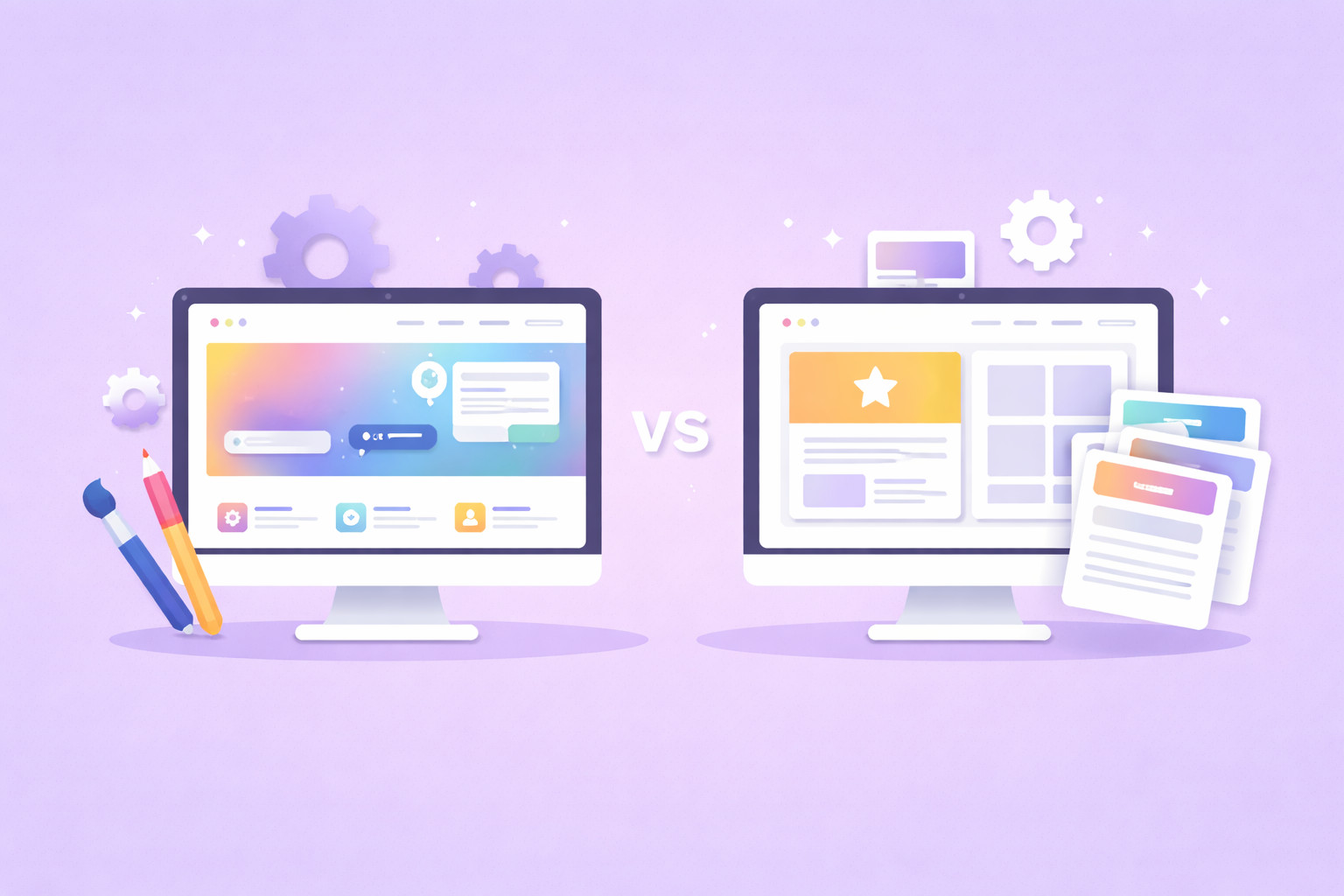
Custom Website vs Template Website in 2026: What Is Worth It?
If you are planning a new website in 2026, one of the first decisions you will face is whether to choose a custom build or use a template.
Both options can look modern. Both can function well. But they serve very different purposes.
The real question is not which one is better in general. It is which one makes the most sense for your business goals, growth plans, and budget.
Here is a clear breakdown to help you decide.
What Is a Template Website?
A template website uses a pre designed layout.
You typically:
- Choose a theme
- Adjust colours and fonts
- Replace text and images
- Add your content
Templates are widely available on platforms like WordPress, Shopify, and other website builders.
They are fast to launch and generally more affordable.
What Is a Custom Website?
A custom website is designed and developed specifically for your business.
Instead of starting with a fixed layout, the structure is created around:
- Your services
- Your target audience
- Your brand identity
- Your conversion goals
- Your SEO strategy
Every section, layout decision, and call to action is intentional.
Cost Comparison in 2026
Template Website:
- Lower upfront cost
- Faster setup
- Suitable for tight budgets
Custom Website:
- Higher initial investment
- Longer development timeline
- Greater strategic input
Templates are appealing for startups or small businesses needing quick presence.
Custom websites are typically chosen by businesses focused on long term growth.
Performance and Speed
Templates often include:
- Extra scripts
- Unused features
- Heavy design elements
This can impact speed.
Custom websites are typically:
- Leaner
- Optimised for performance
- Built with only necessary features
In competitive industries, speed can directly affect both SEO and conversions.
SEO Flexibility
Templates can be optimised for SEO, but they may have limitations in:
- URL structure
- Schema markup flexibility
- Page hierarchy
- Advanced technical customisation
Custom websites allow:
- Structured content architecture
- Clean code
- Intent driven page creation
- Scalable SEO strategies
If SEO is a primary growth channel, custom development often provides more long term flexibility.
Scalability and Growth
Templates are ideal for simple sites.
However, as your business grows, you may need:
- Custom integrations
- Advanced functionality
- Unique service structures
- Conversion optimisation changes
Templates can become restrictive over time.
Custom websites are built with scalability in mind.
They are easier to expand without redesigning from scratch.
Conversion Strategy
Most templates are designed to appeal broadly.
They are not built around your specific customer journey.
Custom websites can be structured to:
- Guide visitors step by step
- Highlight differentiators clearly
- Integrate trust signals strategically
- Optimise call to action placement
If lead generation is your priority, conversion focused structure matters.
Branding and Differentiation
In competitive markets, standing out matters.
Templates can look professional, but they often resemble many other websites.
Custom websites allow you to:
- Express a distinct brand identity
- Create unique layouts
- Control visual hierarchy fully
- Align design with positioning
If you want your business to feel premium or specialised, custom design strengthens perception.
When a Template Makes Sense
A template website may be the right choice if:
- You are launching a new business
- You need a simple online presence
- Your budget is limited
- You do not rely heavily on SEO
- Your services are straightforward
For many small businesses, templates are a practical starting point.
When a Custom Website Is Worth It
A custom website is often worth the investment if:
- You compete in a crowded industry
- SEO is a major growth channel
- You want long term scalability
- Lead generation is critical
- Brand positioning matters
Custom development is not just about aesthetics. It is about building a strategic asset.
The Long Term Perspective
A template can be a short term solution.
A custom website is usually a long term investment.
In 2026, businesses that treat their website as a growth engine rather than a digital brochure often see stronger returns.
The decision should align with where your business is today and where you plan to take it.
Final Thoughts
There is no universal right answer.
Templates offer speed and affordability.
Custom websites offer flexibility, scalability, and strategic depth.
If your goal is simply to exist online, a template may be enough.
If your goal is to dominate your market, generate consistent leads, and scale over time, a custom website is often worth the investment.
If you tell me your industry and growth goals, I can give you a clearer recommendation based on your situation.