The Cost of a Bad Website in 2026: How Poor Design Hurts Revenue
A bad website does not just look unprofessional.
In 2026, it directly costs you money.
Your website is often the first interaction someone has with your business. If that experience is slow, confusing, outdated, or untrustworthy, potential customers leave before you even get a chance to speak with them.
Here is how poor website design quietly damages revenue and growth.
1. Lost Enquiries From High Bounce Rates
If visitors land on your website and leave within seconds, that is lost revenue.
Common reasons include:
- Slow loading speed
- Cluttered layout
- Confusing messaging
- No clear call to action
- Poor mobile usability
In 2026, attention spans are short and expectations are high.
Every visitor who leaves without taking action represents missed opportunity.
2. Lower Search Rankings
Search engines evaluate user experience.
If your website:
- Loads slowly
- Is not mobile friendly
- Has weak structure
- Contains outdated content
Rankings can suffer.
Lower rankings mean less visibility. Less visibility means fewer enquiries.
Poor design and weak technical performance indirectly reduce traffic and revenue.
3. Reduced Trust and Credibility
Design influences perception.
An outdated or poorly structured website can signal:
- Lack of professionalism
- Lack of attention to detail
- Lack of investment in your own business
Even if your services are excellent, users make quick judgments.
In competitive markets, trust often determines who receives the enquiry.
A weak website can make your competitors appear stronger.
4. Weak Conversion Structure
Many websites fail not because of traffic, but because of structure.
Common problems include:
- No strong headline
- Too many navigation options
- Calls to action buried or unclear
- No social proof
- No clear explanation of benefits
Without strategic structure, visitors do not know what to do next.
Confusion reduces conversions.
5. Poor Mobile Experience
Most users browse on mobile devices.
If your website:
- Has small buttons
- Requires zooming
- Loads slowly
- Has awkward navigation
You are likely losing a large portion of potential customers.
Mobile first design is essential in 2026.
If mobile usability is poor, conversion rates drop significantly.
6. Missed Opportunities for Upselling and Cross Selling
A well structured website guides users through a journey.
A poorly designed site:
- Fails to highlight related services
- Does not showcase case studies
- Lacks persuasive sections
- Does not reinforce value
This means fewer opportunities to increase average project value.
Good design does not just attract leads. It maximises them.
7. Higher Advertising Costs
If you run paid ads but send traffic to a weak website, your return on investment decreases.
Low conversion rates mean:
- Higher cost per lead
- Wasted ad spend
- Reduced campaign profitability
Improving your website can often produce better results without increasing your advertising budget.
Design and performance directly affect marketing efficiency.
8. Long Term Brand Damage
Your website is your digital storefront.
If it feels outdated or inconsistent, it weakens your brand perception over time.
Strong brands invest in:
- Clear messaging
- Modern design
- Fast performance
- Professional visuals
A weak website can quietly damage your positioning, even if customers do not explicitly mention it.
The Real Financial Impact
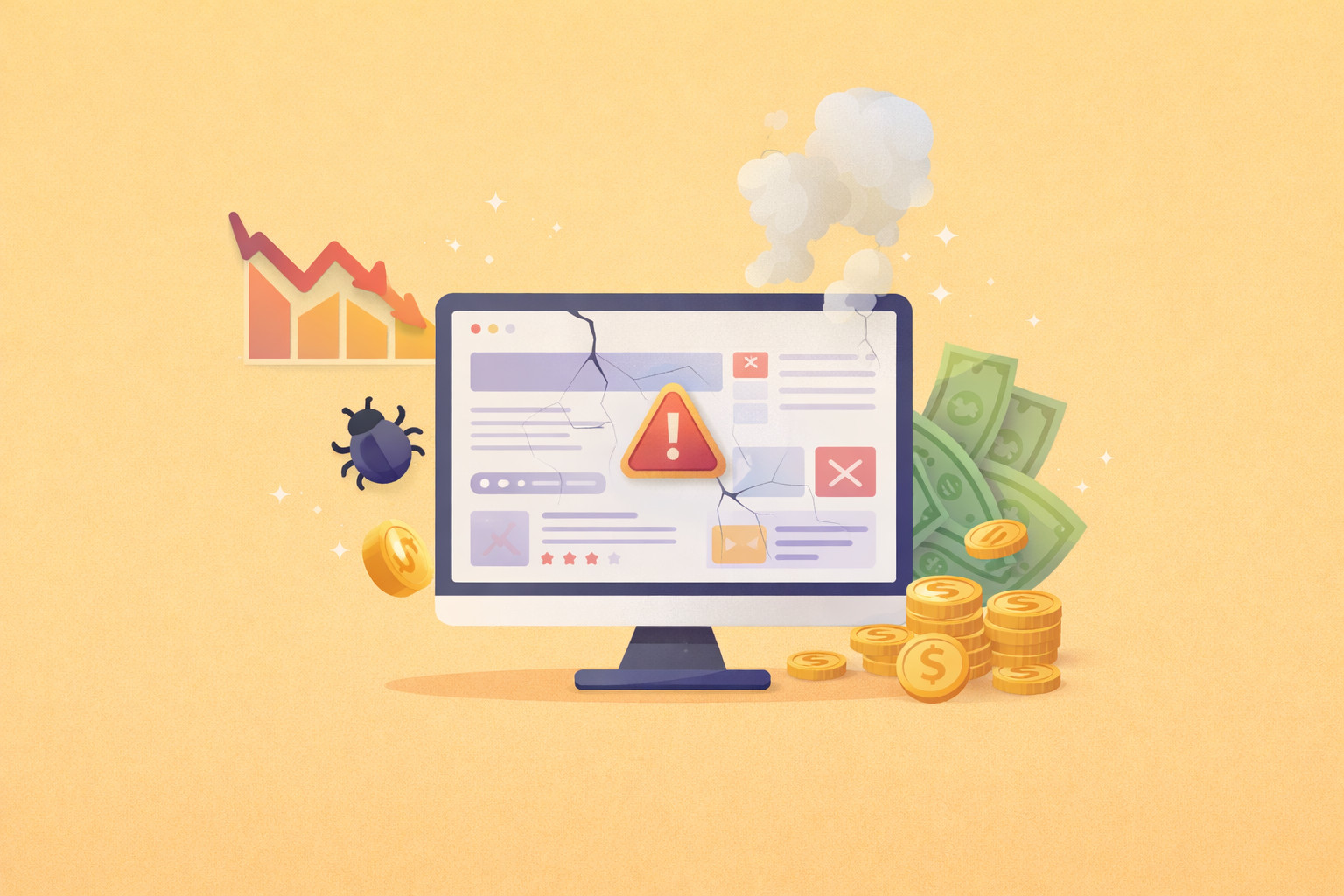
The cost of a bad website is rarely obvious in one moment.
It accumulates through:
- Lost enquiries
- Lower rankings
- Reduced trust
- Decreased conversion rates
- Wasted marketing spend
Over months or years, that lost revenue can significantly exceed the cost of improving your site.
Final Thoughts
In 2026, your website is not just a brochure. It is a core revenue tool.
If it is slow, confusing, outdated, or poorly structured, it is likely costing you opportunities every single day.
Investing in strategic, conversion focused design is not about aesthetics. It is about performance.
A strong website:
- Builds trust instantly
- Guides visitors clearly
- Converts traffic into leads
- Supports SEO
- Increases marketing return
If your website is not actively helping your business grow, it may be time to treat it as an investment rather than an expense.